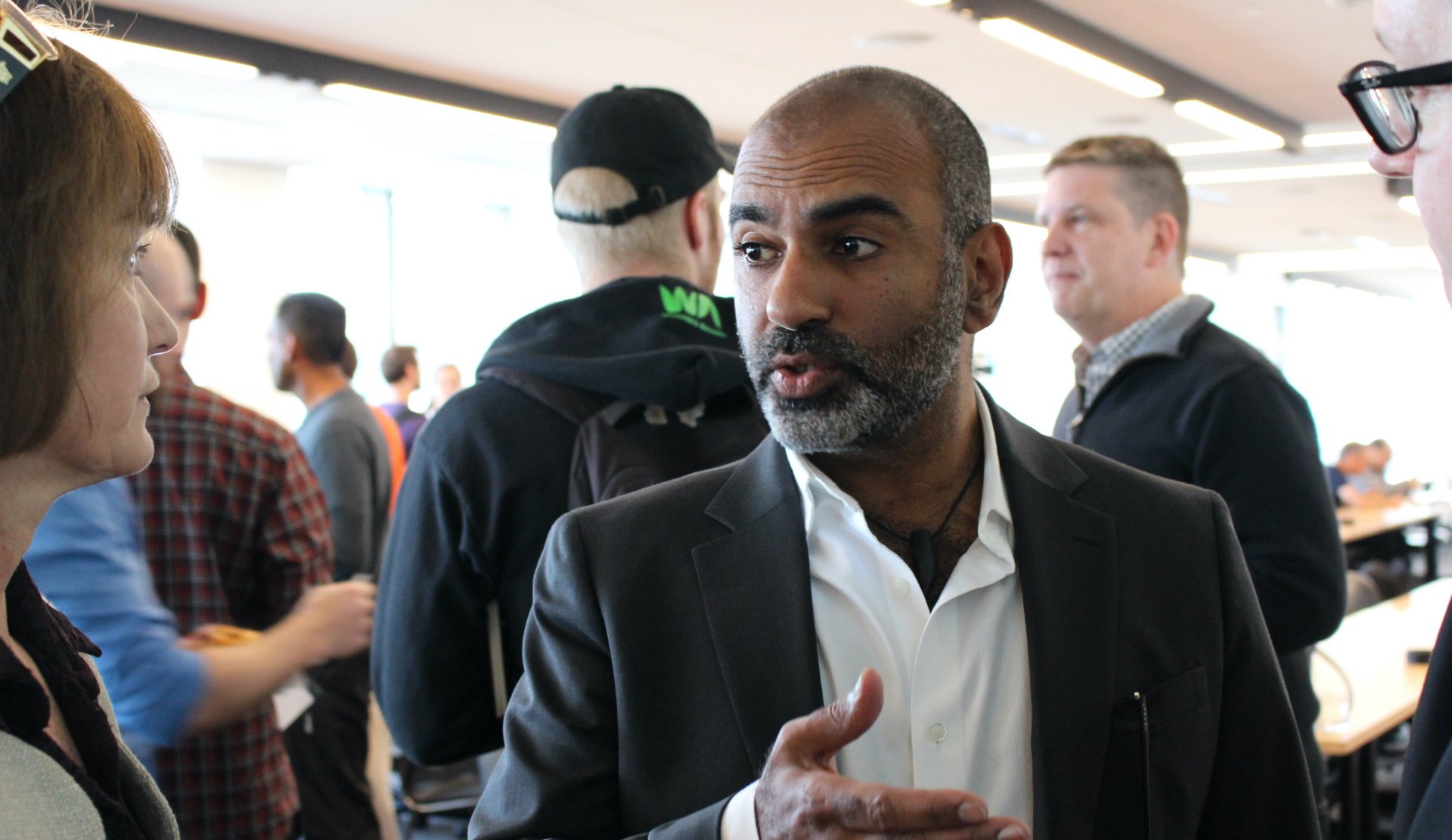
Hi, I Am Saqib Rasool.
I help people and organizations get unstuck and build futures worth having.
Saqib Rasool
Inventor. Author. Mentor.
-
I admire innovators — people with an entrepreneurial streak, fearless leaders who see problems as opportunities and move with urgency to act. Those are my people.
I love fighting alongside an underdog.
My aim is to unfold the potential of human beings to face the massive shifts of our era and to invent new ways of working, living, and rebuilding society. My deepest passion is to help entrepreneurs, changemakers, and leaders realize their full potential by learning the skills and sensibilities for navigating life and building better worlds.
To this end, I make myself available as a coach and mentor to all who take on serious commitments — founders, executives, engineers, artists, and anyone who seeks to turn breakdowns into breakthroughs and live with dignity and power.
How I came to do this work is a story of evolution.
-
I grew up in Pakistan, drawn to how things work — machines, systems, people. I built computers, competed in robotics, and took part in student politics. I wanted to understand how power moved and what role technology might play in shaping the future.
At 20, I saw my father for the last time at Lahore airport and left for the US. I landed in Oklahoma City, learned to speak English, moved from state to state, and eventually graduated in Computer Science from Minnesota State University while interning at IBM in Rochester.
Those years taught me to survive, adapt, and learn fast. I began to see that the future belonged to those who dare to be different and dance to their own music.
-
Six months before I graduated, Microsoft hired me as a software engineer. Within three years, I was trusted to manage important accounts and projects in education, healthcare, and financial verticals. My last job at Microsoft was to oversee the legal compliance of an over $1 billion product line. I learned a great deal about how massive technology enterprises work.
However, repeatedly, I began to feel an invisible glass ceiling, and no matter what I did, I could not break it. I wanted to experience a greater expression of myself and contribute to society directly with my work.
-
After seven years at Microsoft, I left to build companies.
Over the next several years, I co-founded an eco-real estate firm (SY Ventures), a digital payments company (Metafos), a college network (inCampus), and later Conceivian, a startup accelerator to help bring good ideas to life.
Entrepreneurship was daring and unforgiving. I experienced both success and failure. I learned that courage and clarity are not optional; they are the work itself.
During this era, I met Chauncey Bell, who taught me to think about enterprises, and Dr. James McManis, who helped me become a fully autonomous and aware human being.
While helping hundreds of entrepreneurs build their companies, I became consumed by one question: what makes some people become dynamic while others stay stuck? I began to sense that success had less to do with intelligence or resources and more to do with mood, language, and the ability to coordinate with others.
-
In 2013, I closed Conceivian to study that question deeply. I spent the next seven years learning and unlearning — reading, writing, and working with mentors who changed the course of my life.
I met Dr. Fernando Flores, whose work deeply influenced me and revealed to me that human beings live in language and that every future worth living is designed in conversation. He helped me see the invisible forces that shape organizations: the breakdowns, the moods, and the wasted potential that comes from poor listening and carelessness in speech.
During this time, I began applying what I learned in real contexts. The results were undeniable — a $10 million project turnaround at Microsoft IT, the regrowth of a $40 million business unit at Beyondsoft, and the launch of a blockchain product at ZenLedger in under three months.
But the deeper realization was this: the difference between success and failure lies in how we speak, listen, and act together. These skills can be learned. Work, when practiced with awareness and care, can become a place of power and joy instead of frustration and waste.
To expand myself, I took on Vipassana meditation, Shaolin kung fu, and various philosophical studies on communications, relationships, human potential, and innovation.
-
Over time, my work shifted from designing technologies to designing human beings.
Now, my aim is to confront the deeper crises within our people and enterprises — the collapse of meaning, courage, and care. I’ve come to see an unnoticed epidemic of moods: an invisible waste that, if left unaddressed, will exact its cost not only on individuals and organizations but on the foundations of Western civilization itself.
This realization led me to dedicate my life to mobilizing human potential for designing better futures. I founded Rasool Ventures to invest in transformative companies, Conceivian to advance research in human potential, and COROS AI to scale ontological coaching through artificial intelligence. Together, they form the foundation of my work to awaken human excellence in the age of AI.

It’s Up To You!
You are either at the effect of transformation or you are a source of transformation. It's up to you.
Are you Losing or Gaining Power?
“Power is the ability to make something happen that wouldn’t otherwise,” Dr. Michael Mann.
The phenomenon of power concerns us as human beings, as it allows us to participate in the play of our existence and enables us to take care of ourselves and our communities. Like water is to fish, power is to human beings—invisible, all-pervasive, and encompassing all happenings.
The history of power is the history of language. Power exists as a historical drift—a narrative created, reified, and preserved in traditions, bylaws, founding documents, and various linguistic constructions. With the declarative powers of language, institutions are spoken into reality, where power becomes institutionalized, concentrated, and mobilized. Institutions then develop a network of linguistic distinctions, such as declarations of generational alliances, codes of conduct, and commitments of interdependence and co-existence with other institutions. Institutional power is born and killed in language.
Would you like to explore what it means for you personally and your organization?

New Era, New Habits
Our success in life in the New Era depends on our resilient habits and new networks of trust. For any entrepreneur, the program of building a powerful enterprise must begin with a program of building a powerful self.
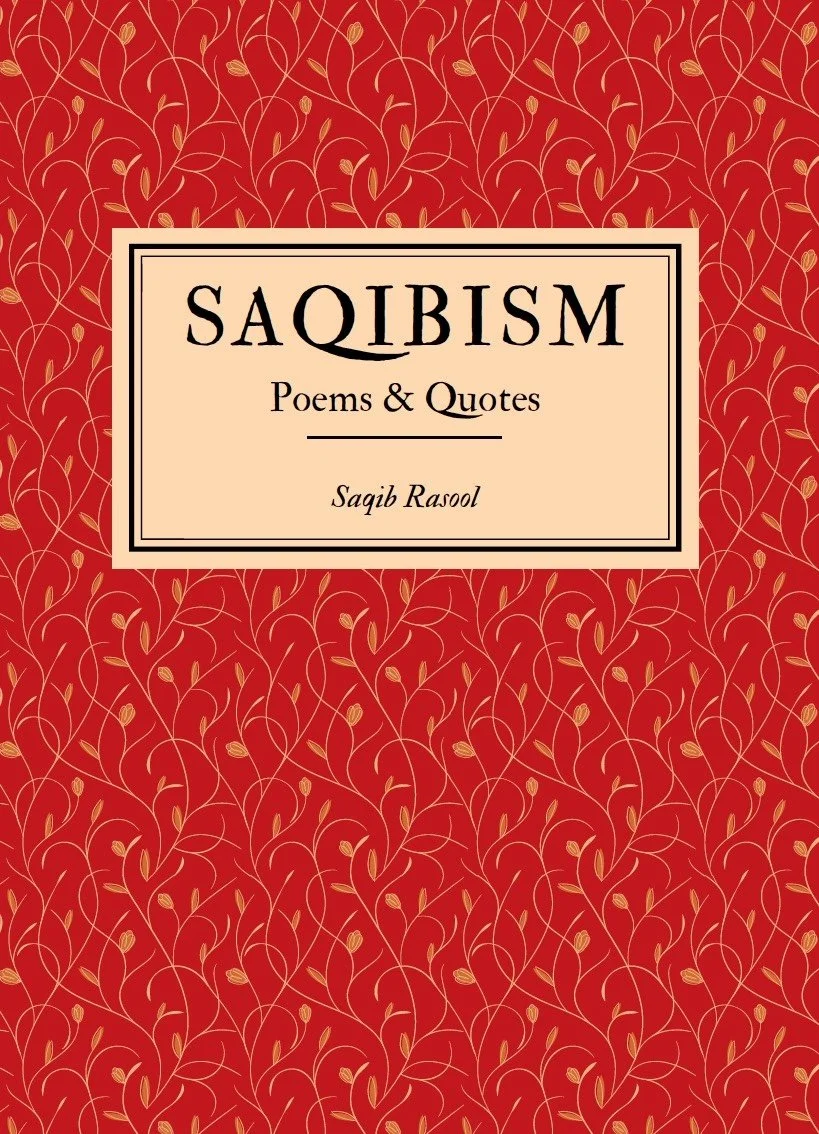
A Gift of Poetry
“Saqibism—a playful title suggesting the unfolding of your own greatness. In this intimate book, Saqib Rasool, with his Koen-like quotes and poems, exposes the vulnerabilities of human nature and opens a new conversation about bringing a profound transformation to our inner worlds via contemplation and meditation, and outer worlds via innovation and entrepreneurship. Saqib sees entrepreneurship as a service to fellow humans where the entrepreneur, having curbed his or her desire to only make money and chase after sensual pleasures, is then engaged in the process of bringing forth the social change that we so desperately need right now. Containing a call to the resurrection of oneself, this book will open a new dimension in your mind and soul. Read this if you want to give your life’s work a deeper meaning. And don’t be scared when you see your reflection staring back at you.” — From Amazon