We continue the work of our forebears.
Whatever we bring to life is never invented from nothing. It is a continuation and reinterpretation of the traditions we inherit. The ideas that gave birth to Conceivian and COROS AI come from a long line of thinkers, practitioners, and provocateurs who redefined what it means to be human, how language works, and how coordination happens. This is the living stream we now carry forward.
Fernando Flores
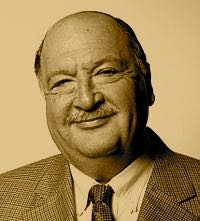
Statesman, entrepreneur, and innovator, Fernando Flores built one of the most important traditions for transforming how human beings work and live together. He studied with Humberto Maturana, John Searle, and Hubert Dreyfus, and was deeply influenced by Martin Heidegger’s philosophy of Being, J.L. Austin’s theory of speech acts, and Francisco Varela’s biology of cognition. In politics, he was shaped by Salvador Allende, under whom he served as Chile’s Minister of Finance before being imprisoned during the 1973 coup.
Flores wove these strands into a rigorous, practical approach for expanding human capacity in enterprises, families, and personal life. He transformed Heidegger’s philosophy, Maturana’s biology, and Austin’s language theory into methods for listening, coordinating action, building trust, and generating new futures. His collaboration with Terry Winograd at Stanford produced the landmark Understanding Computers and Cognition, which challenged the prevailing logic of information systems and declared that work is coordinated in language through networks of commitments. Winograd carried that orientation forward at Stanford, where he later advised a doctoral student named Larry Page, guidance Page would call the best advice he ever received, shortly before he left to co-found Google.
From this foundation, Flores launched The Ontological Design Course and co-founded Business Design Associates, which became crucibles for training leaders, entrepreneurs, and change agents in a new way of working. With Chauncey Bell and technologists like James Gosling, who later invented Java, Flores developed The Coordinator, a groundbreaking system for managing commitments in organizations that prefigured today’s collaboration platforms. With Robert Solomon, he authored Building Trust, a pivotal work in business ethics.
Flores’s influence reached far and wide. His collaborators and students carried the tradition into coaching, consulting, and organizational transformation, reshaping leadership in companies and public institutions across the Americas and Europe. These are people we have come to know and respect.
My own path into this tradition began at Microsoft, where I met James McManis, who was quietly working to transform American business enterprises on new ethical grounds. McManis introduced me to Chauncey Bell, Flores’s long-time collaborator and right-hand in building Business Design Associates and The Coordinator. Chauncey and I co-founded Harvester Academy, bringing this work to founders, executives, and coaches.
In 2014, Chauncey introduced me to Fernando Flores. Studying with him in long-term programs changed how I saw the central questions of our time: what does it mean to be a human being born, living, and working in an era of profound and accelerating change? Flores taught me that breakdowns are not failures to be avoided, but openings for new action, and that transformation begins in the conversations we hold and the moods we inhabit.
In 2019, I founded Conceivian with Victoria Ruelas and Mareya K. Ali. Soon after, Avi Bathula joined, and together we began designing experiments to mobilize human potential in enterprises as well as in people’s careers and families. That work now continues as COROS AI, a technology that does not replace thinking, but provokes it.
A lineage is not only the thinkers behind us. It is also the partners who gave the work a place to prove itself. These leaders opened their companies to us, and the results were measured, not assumed.
Will Poole, co-founder and managing partner of Capria Ventures and the former Microsoft executive who led its multibillion-dollar Windows client business, brought us into the Capria network to deploy this work directly with founders across its global portfolio. Across the ELP 101 cohort, our director of research, Dr. Amy Graglia, measured the outcomes: a 100% overall satisfaction score, with leaders moving from frustration and being stuck to possibility and clarity. Will remarked he had never seen results quite like it.
Bruce Edwards, CEO of a Planet Fitness franchise group of more than eighty clubs, brought us in when alignment among his board and executive team had broken down and nothing he tried could restore it. Working at the level of language, moods, assessments, and commitments, and supported by our technology, the team realigned and the company went on to record historic revenues.
We are grateful to these design partners. They helped us see, in the world and not just in theory, what this work makes possible.
This is the gift we were given. This is the gift we now extend. We stand on the shoulders of those who saw the future long before the world was ready.
With gratitude,
Saqib Rasool